Product Technical Parameters
| Model | MSB-26(glass door waterproof) | HS code | 3925200000 | |
| Main body | WPC board | Lead time | 25-30 days | |
| Width | 500/550/600/650/700/750/800/850/900/1000 | Style |
Home door/Hotel door/school door/Hospital door/Commerical door...) |
|
| Length | Customizable | Material | WPC(Wood polymer Composition) | |
| Color |
Glossy/matt pure color/wood grain(Ivory white, oak rosewood, teak wood...) |
Thickness | 45/55/60mm | |
Product Features and Advantages
- Advantages and disadvantages introduction

Wood-plastic composite doors offer a range of notable advantages, making them a popular choice in various applications:
-
Exceptional Durability: They are highly resistant to warping, cracking, and rotting, even in humid or moisture-prone environments like bathrooms and kitchens, outperforming many traditional wooden doors.
-
Low Maintenance: Unlike solid wood doors, they require minimal upkeep. No frequent painting, staining, or sealing is needed-simple cleaning with soap and water is usually sufficient to keep them in good condition.
-
Eco-Friendly: Made from a blend of recycled wood fibers and plastic, they help reduce reliance on virgin timber and plastic waste, contributing to sustainable practices.
-
Pest and Mold Resistance: Their composition makes them impervious to termites, beetles, and mold growth, ensuring long-term structural integrity and hygiene.
-
Versatile Aesthetics: They can be designed to mimic the look of natural wood with various textures and finishes, while also offering sleek, modern styles to suit different interior decors.
-
Cost-Effective: While initially competitive in price, their long lifespan and low maintenance needs result in overall lower costs compared to many traditional door materials over time.
- Processing techniques: PVC lamination and painting.

The four steps shown in the image for door production are as follows. First is Surface Treatment, where the door surface is prepared to ensure proper adhesion. Next is PVC Film Feeding, involving the supply of PVC film for lamination. Then comes Heat Lamination, which uses heat to bond the PVC film to the door surface. Finally, Trimming & Cooling trims excess film and cools the door to finalize the lamination. For making a WPC door, the full process starts with raw material preparation and mixing. Then, compression molding shapes the material. After that, the base material is cut and sanded. Woodworking processes follow, including paint finishing and PVC lamination (as depicted in the image). Quality inspection is then conducted, and finally, the door is packaged.

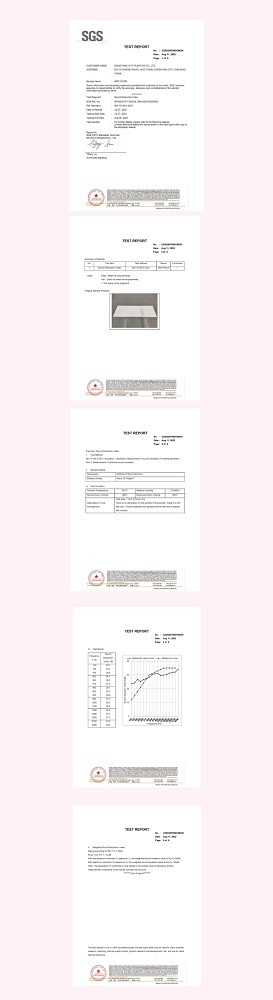
Quality Commitment---SGS
-
Service Philosophy: Market-Oriented, Customer-Centered
-
Service Spirit: Full-Cycle Attention, Dedicated Support
-
Service Model: One-Stop Service, Consultative Service
-
Service Commitment: Humanized Service, Professional Service, Standardized Service, 24/7 Round-the-Clock Service
-
Service Goal: Fast, Convenient, Comprehensive, to Make Customers Comfortable and Assured