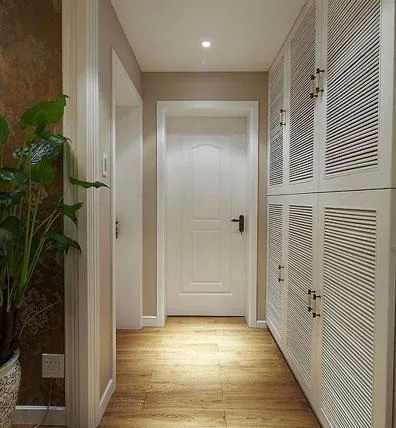
Driven by the advancement of carbon neutrality goals and the implementation of green building policies, Wood Plastic Composite (WPC) doors have emerged as a new growth driver in the building materials industry, thanks to their eco-friendliness, excellent weather resistance and cost advantages. Evolving from imitation to independent innovation, and from single products to systematic solutions, the WPC door sector is embracing high-quality development powered by technological upgrades.
1. Solid Foundation Driven by Policies and Market Demand
As a recyclable, low-formaldehyde and highly durable green building material, WPC doors fully comply with national green building standards and carbon peaking plans, and are widely adopted in prefabricated buildings and indemnificatory housing.
Against the backdrop of consumption upgrading and housing renovation, WPC doors stand out among traditional door products. They are waterproof, moisture-proof, anti-corrosive, insect-resistant and sound-insulating, overcoming the defects of solid wood doors and aluminum alloy doors. With superior comprehensive performance, they are applicable to kitchens, bathrooms, outdoor areas and various extreme environments, enjoying huge market potential worldwide.
2. Three Major Innovation Directions: Materials, Structure and Technology
Innovation is the core momentum for the industry to break through development bottlenecks. Manufacturers are concentrating on upgrades in three key areas.
Material Innovation
Beyond conventional wood flour and PVC formulas, new materials such as nano-modified composites, bamboo-based composites and bio-based materials have been developed. These new formulas greatly enhance wear resistance, UV resistance and structural strength. Meanwhile, B1-grade flame-retardant technology has been widely applied to meet stricter global building safety regulations.
Structural Innovation
Product structures have been optimized to be lightweight yet high-strength. Improved cavity designs reduce weight while boosting compression resistance. Integrated multi-layer structures deliver better heat preservation and sound insulation. Equipped with high-performance sealing strips, the doors achieve outstanding windproof, waterproof, dustproof and silent effects. Exquisite carved lines and mouldings also enrich the aesthetic design to match diverse decoration styles.
Process Innovation
Production is moving toward automation, digitalization and environmental protection. Intelligent production lines and real-time defect detection systems cut product defects and raise efficiency. Advanced surface treatment technologies like UV thermal transfer and PUR lamination create realistic wood textures, with features of zero formaldehyde, scratch resistance and easy maintenance.
3. Future Development Strategies
To get rid of homogeneous low-price competition, the industry will forge ahead in four major directions.
High-end Positioning
Enterprises will shift from price competition to value competition. More customized high-end products and complete door system solutions will be launched for villas, hotels and premium residences. Global authoritative certifications will be obtained to improve brand influence and product added value.
Intellectualization
Combined with smart home technologies such as smart locks and remote monitoring, intelligent WPC door systems will be developed to fit modern smart living and office scenarios. Digital management will also be applied throughout design, production and installation processes.
Scenario-based Customization
Targeted products will be developed for different usage environments: antibacterial and easy-clean doors for hospitals and schools, salt-fog and mildew-resistant doors for coastal areas, and heat-insulated doors for cold regions. Products will also be tailored to meet the climate features and aesthetic preferences of overseas markets.
Global Layout
While expanding domestic business in urban renewal and prefabricated construction projects, enterprises will accelerate overseas expansion. Focus will be placed on markets in Southeast Asia, the Middle East and Europe, with differentiated product strategies to suit local demands. Export volume keeps growing steadily, making overseas business a new growth engine.
Conclusion
From an alternative building material to a mainstream green product, the WPC door industry keeps evolving via continuous innovation. Despite existing challenges such as overcapacity of low-end products and insufficient core technologies, the sector is embracing a promising future.
Sticking to green development, technological innovation and strict quality control, the WPC door industry will forge ahead toward high-end, intelligent, customized and globalized development. It will continue to thrive in the global building materials market and contribute to low-carbon and eco-friendly architecture.